Alison & Boyd

mirrityana – out in the sunlight

collab 2019-03-14

Made for the "Art of Threatened Species", a project of the Dubbo Regional Gallery and the Office of Environment and Heritage, Dubbo, this installation was exhibited at Dubbo Regional Gallery and Broken Hill City Gallery. The work is our response a tiny, endangered dragon lizard of semi-arid NSW, and to the field work with scientists and Traditional Owners researching and caring for it.

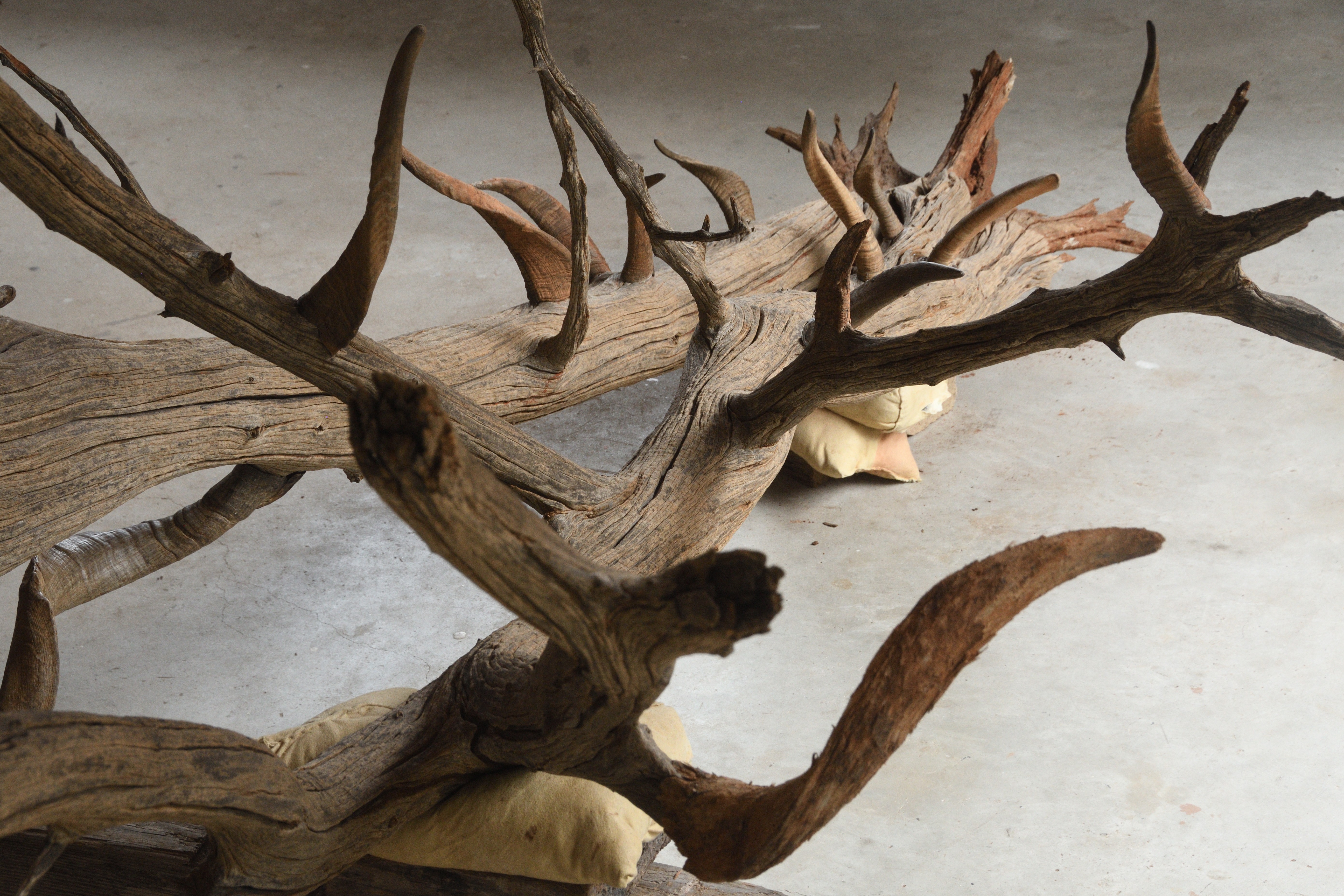
Dragon Goat Mulga mulga tree, soundtrack , wild goat horns, old sawhorses
Dragon Goat Mulga mulga tree, soundtrack , feral goat horns, old sawhorses, soundtrack

Named Ctenophorus mirrityana the Dragon’s species name means “out in the sunlight” to Baakindji people, whose ancestors have engraved lizards in the rocks here over countless millennia. Today Baakintji people care for Mirrityana country in a joint management scheme with the National Parks & Wildlife Service at Mutawintji. With the support of the Traditional Owners we accompanied the scientific survey team in the field, seeking out  Mirrityana along predefined transects, logging their numbers and features, photographing them where we could. We researched the Dragon’s stoney ledge habitat and the threats it faces. Introduced goats are identified as the key threatening process to the survival of the Mirrityana (or Barrier Range Dragon).
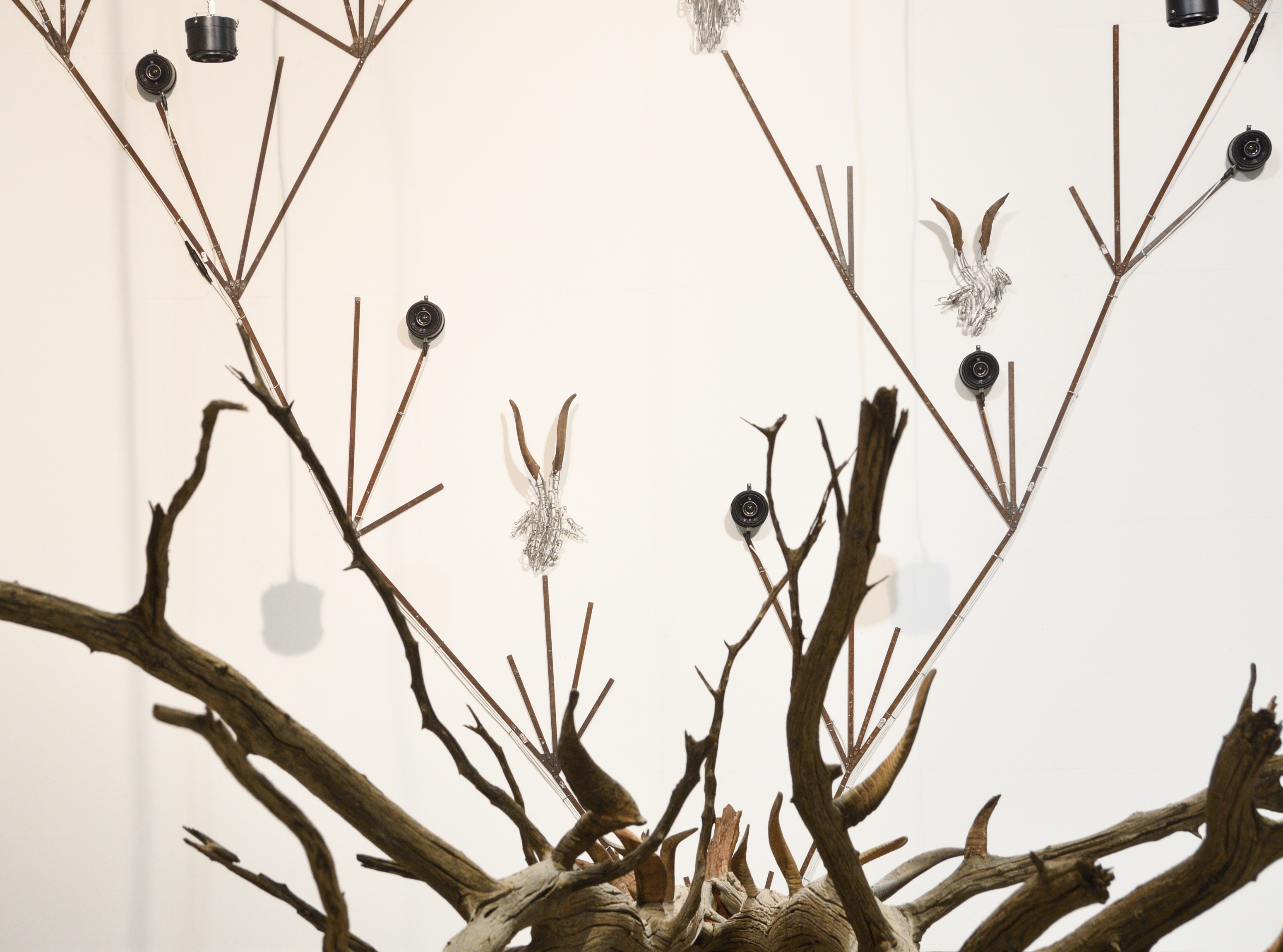
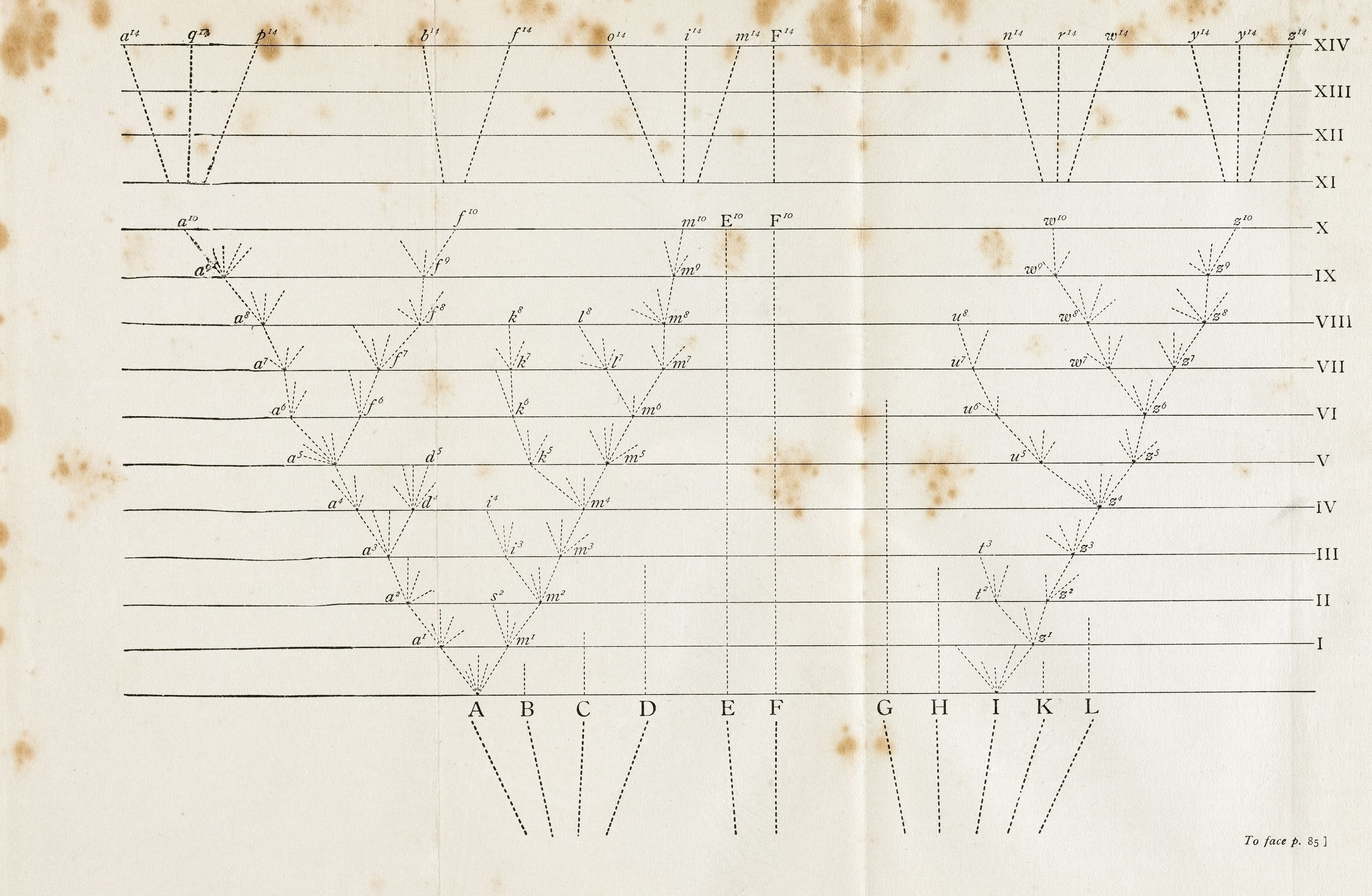
Darwin’s Tree (phylogenetic tree) recycled metal, solid rivets, wild goat horns, soundtrack, ochre
 Darwin’s Tree (phylogenetic tree) recycled metal, solid rivets, wild goat horns, soundtrack, ochre
Darwin’s Tree Giclee print of Charles Darwin’s diagram, of the phylogenetic tree from my Grandfather’s 1910 edition of The Origin of Species.
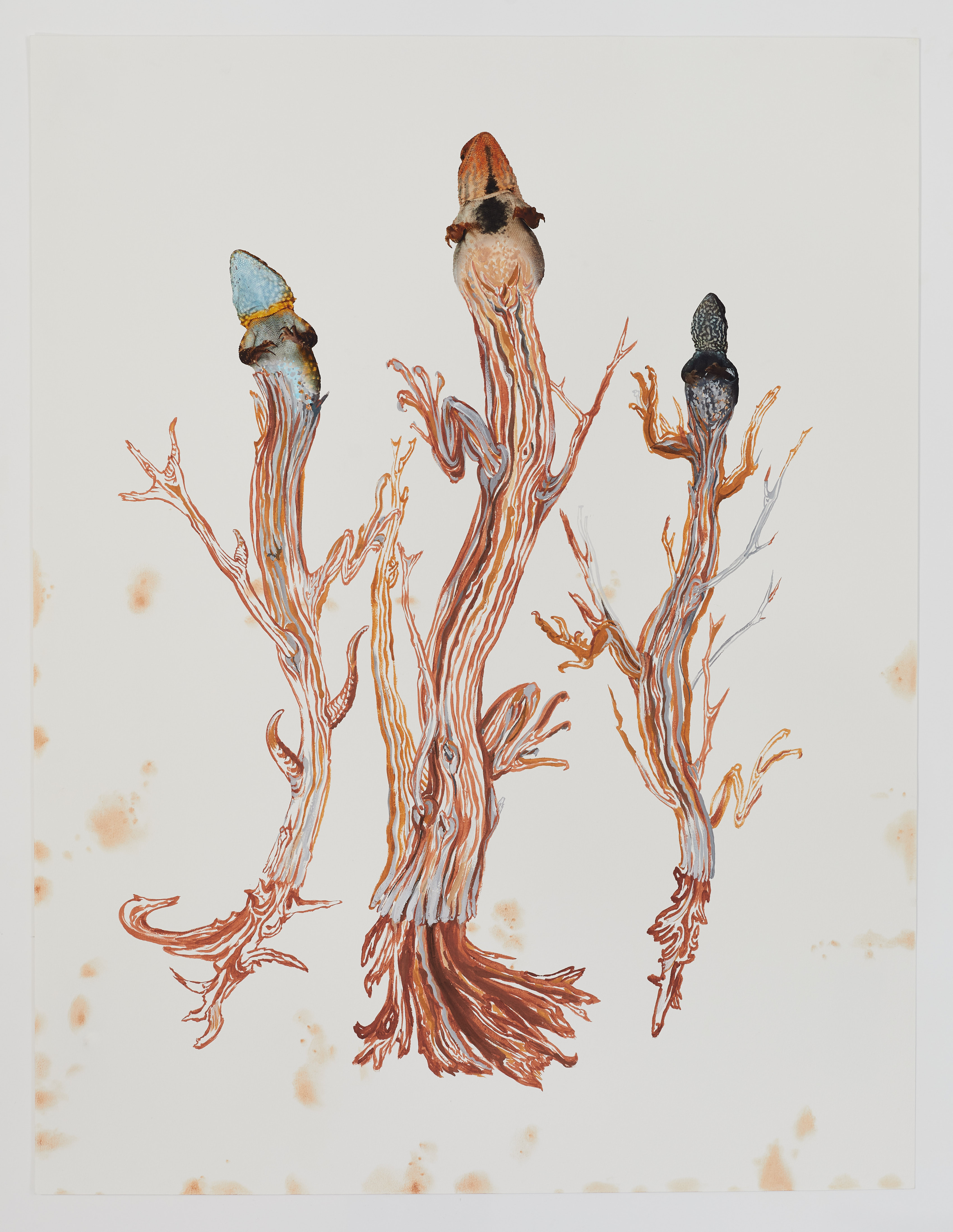
Alison Clouston and Claire McLean 2019 Giclee prints on Hannemuhle paper of scientific study photographs by Claire, ochre, pigmented ink
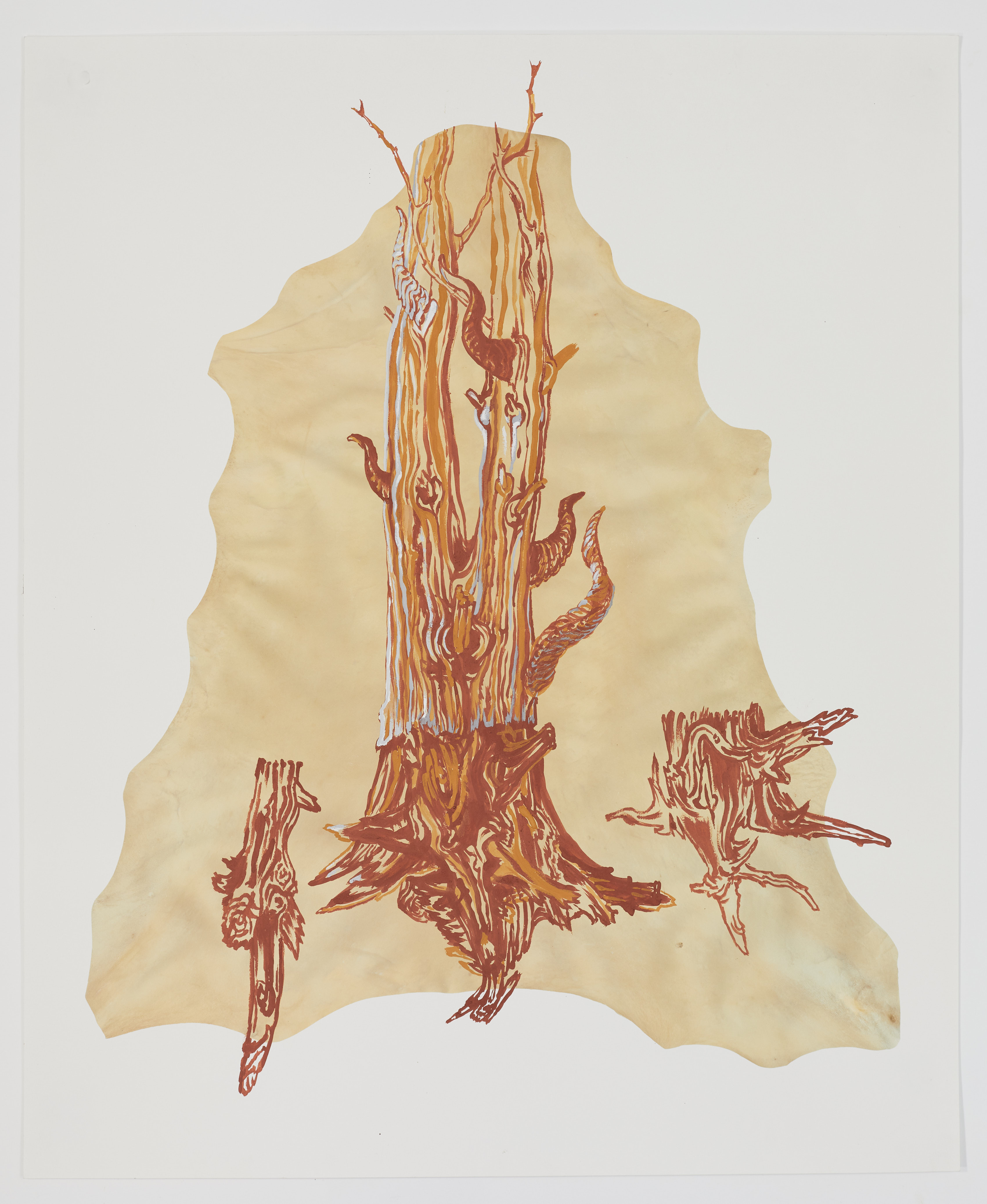
Digital scans of sheepskin parchment, ochre, pigmented ink

Central to the installation is "Dragon Goat Mulga” comprising a salvaged desert Mulga tree sprouting goat horns found in the Mirityana’s habitat, also the source of the wall of sound that cascades from the speakers suspended above – the sound of goat pellets pelting on sandstone. On the wall is “Darwin’s Tree (phylogenetic tree)” a rendition in steel of Darwin’s diagram for his radical notion of evolution as a branching tree of life, a metaphor still used in biology today. To us it signifies the deeply spiritual notion of the interconnectedness, the relatedness, of all species of life on Earth. We are all kin.

Our tree has branches that terminate not in doomed species but with speakers and goat horns; twin dragon sculptures emerge from each pair like a kind of increase magic. The emerging sounds are composed from field recordings made in drought, from microphones steeped in shrinking rock-holes, and amongst dry wind rattling the hard-leaved arid shrubs, or singing along the old fence wires. Around the sculptural pieces, works on paper illuminate the connections. Dragons merge with tough desert Mulga trees. Darwin’s Tree of Life is reprinted from Grandfather’s copy of “The Origin of Species” rubbed with desert ochre to resemble foxing, the process by which living organisms devour texts.

Thousands of years of artworks that accumulate on the rocks here at Mutawintji are testimony to the long connection of Baakintji people and the myriad species they have shared this country with. Lizards appear often in the petroglyphs and paintings. Everywhere on Earth where humans have lived amongst myriad species, we have told stories, engraved and painted the ground, sung songs and made ceremonies enlarging our sense of connection to all the rest of nature. For every extinction of a species or ecological community, we risk a concomitant loss of human languages and cultures. Art and science coming together to save a species or an ecosystem might just save us all.

Documenting our first field trip researching Ctenophorus mirrityana

Alison Clouston & Boyd 1)“Darwin’s Tree (phylogenetic tree)” 2019 soundtrack and sound system, recycled metal, solid rivets, feral goat horns, ochre, Giclee print of Charles Darwin’s diagram, from Alison’s Grandfather’s 1910 edition of The Origin of Species, greenhouse audit and offset. 2)“Dragon Goat Mulga” 2019 “DragonGoatMulga” whole mulga tree, soundtrack, wild goat horns, old sawhorses, sheepskin, sacking. 3)Works on paper 2019 (3x by Alison Clouston with Claire McLean 2019 and 3x by Alison) ochre, pigmented ink, digital scans

doc-icon@1x
Download Art of Threatened Species catalogue

Thanks to Leroy Johnson and Mutawintji Local Aboriginal Land Council, NSW Parks and Wildlife and the Mutawintji Board of Management, researchers Marc Irvin, Gerry Swan & Lyndy Marshall, Office of Environment and Heritage, Dubbo, the Dubbo Regional Gallery, Broken Hill Art Exchange, Ann Evers & Rick Ball, Ruby Davies, NAVA, West Darling Arts, Broken Hill City Art Gallery. We honour the Traditonal Elders, past present and future, on whose land we camped and worked. All local materials including sounds with the kind permission of Traditional Owners and custodians, Mutawintji and the Barrier Ranges, Western NSW.